
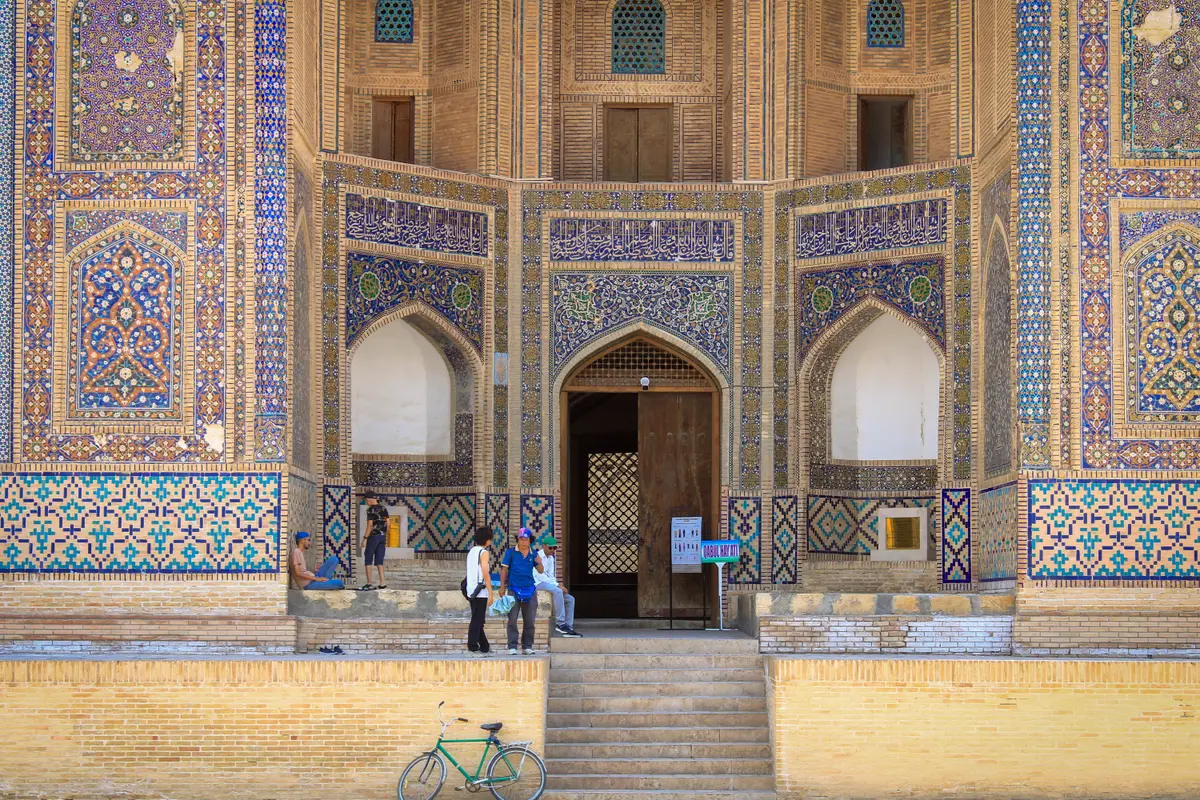
Bukhara, Bukhara, Central Asia, Uzbekistan
Madrasah · Shaybanid · 16th Century
Mir-i-Arab Madrasah is an active Islamic school in Bukhara, Uzbekistan, located opposite the Kalyan Mosque. Built in the 16th century, it is named after Sheikh Abdullah Yamani of Yemen, the spiritual mentor of Ubaydullah Khan. It was the only madrasah in the USSR allowed to operate.
Construction: 1535 – 1536
Founder: Ubaydullah Khan
Key figures: Sheikh Abdullah Yamani (Mir-i-Arab)
Significance: One of the few religious schools that remained open during the Soviet era.
- 1536: Completed
- Soviet Era: Remained functional
Architectural styles: Persian, Central Asian
Materials: Brick, Blue Tiles
- Blue Domes: Two azure domes flanking the facade.
- Portal: High entrance portal (pishtaq).
Opening hours: N/A (summer) · N/A (winter) – Active madrasah, limited access.
- View from outside: €0.00
Accessibility: Exterior only.
Official site: https://en.wikipedia.org/wiki/Mir-i-Arab_Madrasah
Address: Po-i-Kalyan Complex, Bukhara, Uzbekistan
Coordinates: 39.7764, 64.4136